

Electric Wheelchair OEM vs ODM with a Manufacturing Partner
A long scooter catalogue can make a distributor feel well prepared, yet it often makes the customer less certain. If several models appear to do the same job, salespeople fall back on price and the service team inherits more batteries, chargers and controllers to identify. A smaller range with clear roles is usually easier to explain and support.
At Baichen, we begin mobility scooter product range planning with the journeys you want to serve. Is the first customer loading a scooter into a car? Is another riding outdoors every day? Does a retailer need a compact showroom choice or a comfort-focused model? Once we understand those situations, we can help you select from our mobility scooter range without filling the launch with near-duplicates.
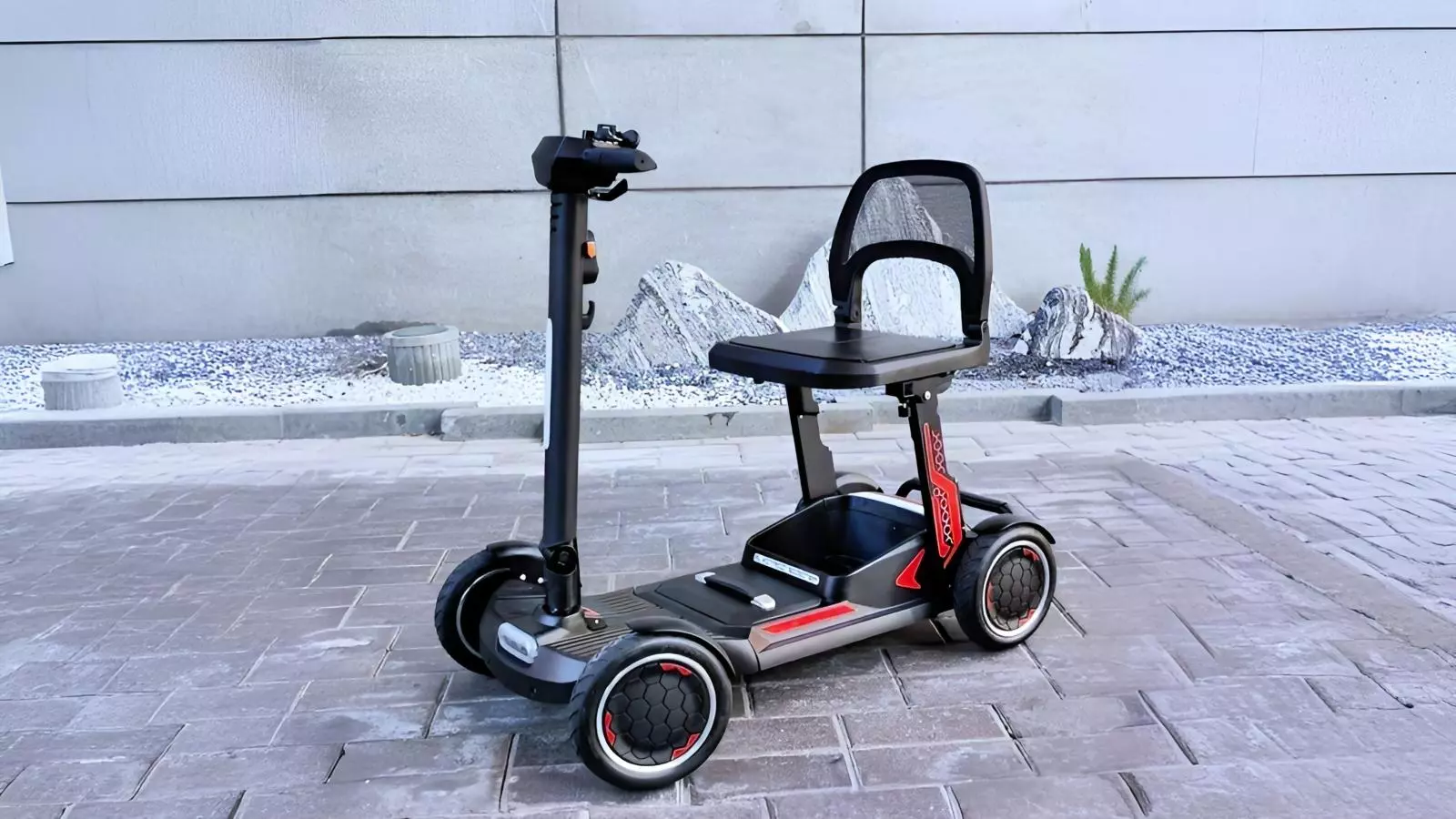
Our quick answer
Start with customers, not model codes. Give each scooter one clear reason to exist, create visible steps between entry, everyday and premium choices, and limit unnecessary component variety. We can help you compare models as a family so that the product pages, dealer explanation, spare-parts plan and launch samples all tell the same story.
Tell us about the customers you want to serve
Begin with the people who will buy and service the scooters. Age alone is not a useful segmentation method. Two customers of the same age may have completely different needs: one wants a scooter that can be lifted into a family car, while another needs a comfortable vehicle for daily outdoor journeys. One has good trunk control and hand strength; another needs easier access, a supportive seat and simple controls.
Before asking an electric mobility scooter manufacturer for models, distributors should interview retailers, service teams and existing customers. Useful questions include:
· Where do customers use scooters most often?
· Do they live in apartments, houses, retirement communities or rural areas?
· Are sidewalks smooth, broken, narrow or steep?
· Do customers rely on private cars, taxis, buses or trains?
· Who folds, lifts or disassembles the scooter?
· What is the typical storage space at home?
· Which repairs can local dealers perform?
· Do customers prefer a medical appearance or a more lifestyle-oriented design?
· Which product complaints are common in the current market?
Sales-channel data matters as well. Online sellers need packaging that survives parcel handling, clear videos and simple setup. Medical equipment dealers may value product demonstrations, service access and replacement parts. Large retailers may require consistent labeling, barcodes, packaging dimensions and standardized support materials. Institutional buyers may focus on durability, documentation and controlled configuration.
Local rules also affect product positioning and user instructions. For example, the UK government publishes separate rules for mobility scooters and powered wheelchairs. We encourage distributors to verify the rules, product classification and permitted use in its own market rather than copy another country's sales language.
Write a one-page market brief before choosing a model. Without it, every attractive feature can look important and the range quickly loses discipline.
Give every scooter a clear job
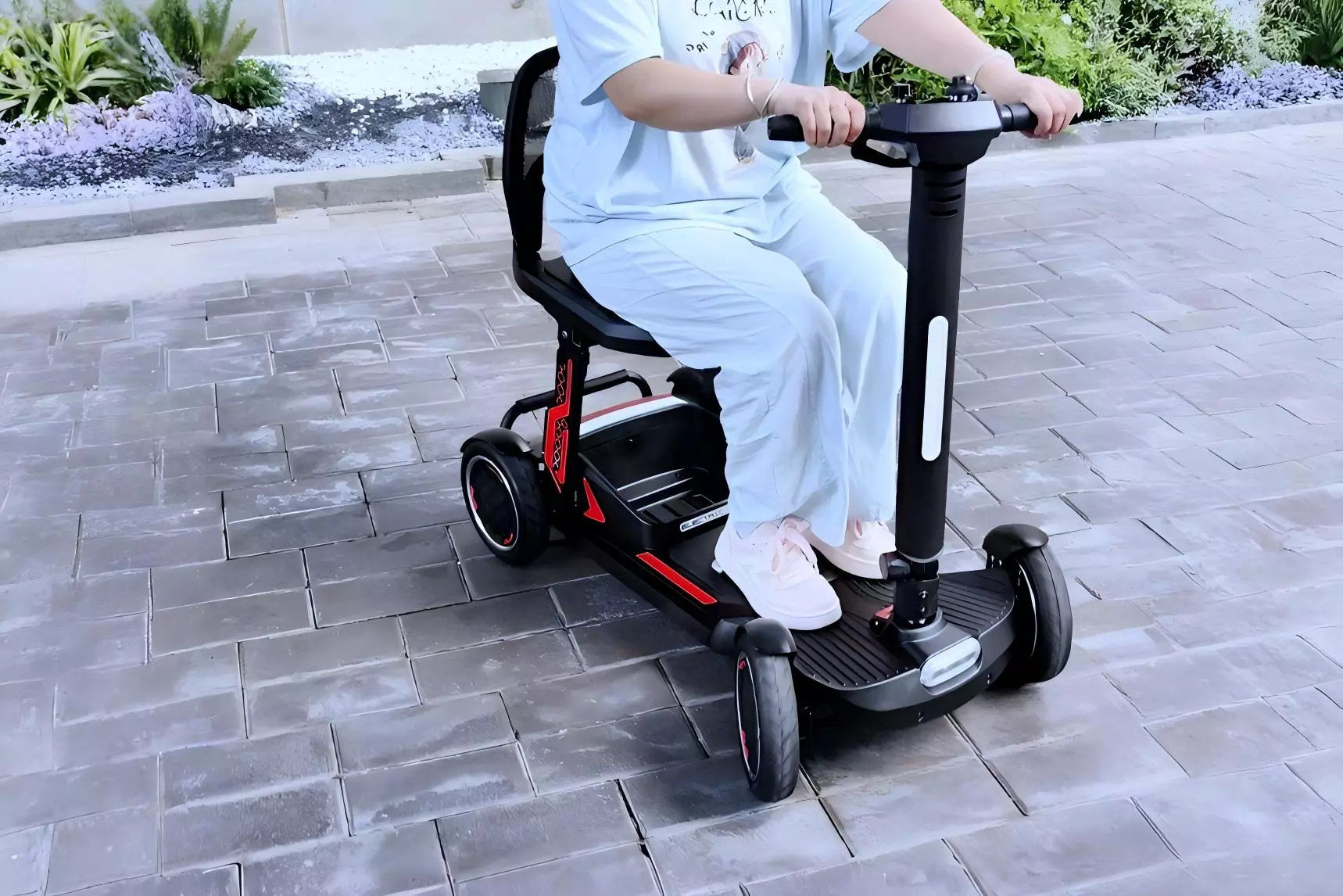
An electric mobility scooter manufacturer may organize products by wheel count, but three-wheel and four-wheel labels do not fully describe how a scooter will be used. A range becomes easier to sell when models are grouped by the job they perform.
Transport and travel segment
These scooters are selected because they can be folded or disassembled for storage and vehicle transport. Buyers care about lift weight, folded volume, battery removal, setup steps and the strength required to operate the mechanism. Automatic folding can reduce handling effort, but it adds electrical and mechanical elements that should be included in service planning.
Compact everyday segment
This segment balances maneuverability, comfort, outdoor ability and storage. The scooter should fit common doorways and retail environments while remaining steady on ordinary sidewalks. Dealers often need a model that can serve as the default recommendation when the customer does not have an extreme portability or terrain requirement.
Outdoor comfort segment
Outdoor-oriented scooters may prioritize a longer wheelbase, larger tires, ground clearance, suspension, lighting, seating and stability. They also tend to require more storage space and are less convenient to lift. We encourage distributors to be clear about that trade-off rather than presenting size as universally better.
Higher-capacity or specialized segment
Some markets need products for higher user mass, longer trips, larger seats or more demanding surfaces. These models should not be added only to claim a broad range. They require careful evaluation of stability, braking, turning space, transport, local rules and after-sales capacity.
Once the use cases are defined, wheel count becomes a design choice within the portfolio rather than the portfolio itself.
Make the next step easy to understand
A product ladder should create meaningful steps. If three scooters differ only in cosmetic details, dealers will struggle to justify the range. Each level should solve a different problem or deliver a visible improvement.
A practical starting structure might be:
1. Good transport model - compact, easy to understand and appropriate for occasional vehicle travel.
2. Better everyday model - improved comfort, stability or controls for frequent mixed use.
3. Best premium model - enhanced folding, materials, seating, ride quality, design or service package for customers who value convenience and finish.
The actual products depend on the market. In a car-dependent region, the premium position may be an automatic folding scooter. In a walkable retirement community, the premium position may be a comfortable four-wheel product. In an urban market with small apartments, compactness may be more valuable than outdoor size.
Avoid building the ladder around price alone. The differences should be visible in the showroom and explainable online. Product images, comparison charts and demonstration videos should use the same terminology as dealer training.
Keep the range manageable after the sale
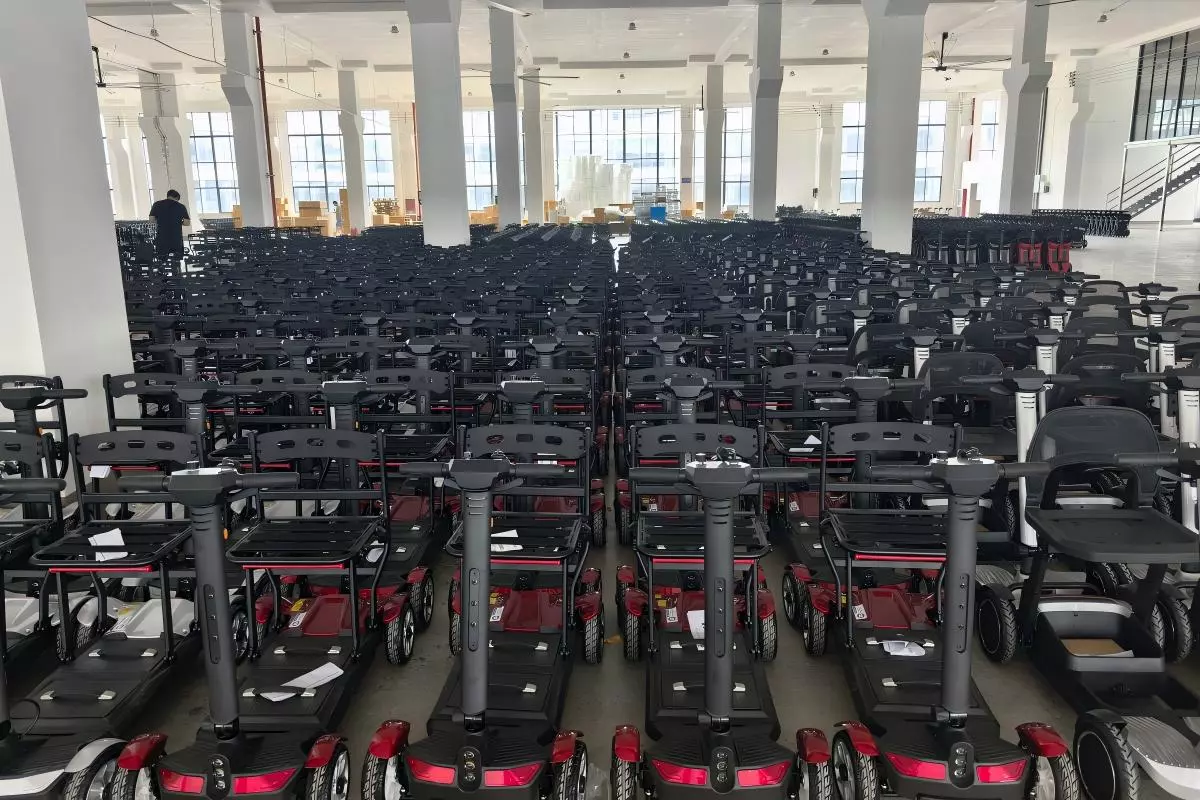
A broad-looking product range can hide an expensive service problem: every model uses a different controller, charger, battery, motor, tire or folding component. A disciplined electric mobility scooter manufacturer should identify shared and model-specific parts before the range is approved. Uncontrolled variety increases inventory, training time and diagnostic errors.
Ask the manufacturer to create a compatibility matrix. Identify which components are shared across models, which are visually similar but incompatible and which revisions require paired replacement. Standardization can reduce spare-parts inventory and improve first-time repair rates, but it should never be forced when a model genuinely needs different performance.
Build the first spare-parts order with the product order. Include high-wear items, easily damaged external parts, critical electronics and model-specific pieces. The exact list should reflect expected sales, local conditions and service capability. Battery storage and shipment require separate controls from ordinary mechanical parts.
Baichen's service information and after-sales FAQ provide a starting point. Commercial partners should still agree on current model-specific terms, parts codes and support procedures in the order documents.
Help dealers answer the question behind the question
A manufacturer and distributor should develop content around the decisions customers actually face. Useful topics include three-wheel versus four-wheel design, folding versus disassembly, lift weight, battery documentation, range conditions, indoor maneuverability, outdoor surfaces and service planning.
On the distributor's product page, place the answer before the feature list. State who the scooter fits, where it works best and how it is transported. Add a comparison table with only the criteria that change the decision. Use original images of the exact model and show scale through people, doors, trunks or storage spaces where appropriate.
Internally link educational content to the relevant category and product pages. On Baichen's site, this means linking portfolio discussions to the scooter category, then to the relevant three-wheel, four-wheel or automatic-folding subcategory. The reader should never reach the end of a guide and wonder which products the manufacturer can actually supply.
Frequently asked questions
How many models should a new mobility scooter product range include?
There is no universal number. Three clearly separated roles may be more useful than six overlapping products. Expand only after inquiries, demonstrations and service data reveal a genuine gap.
Should a scooter range be organized only by wheel count?
No. Organize first by customer mission, transport, terrain, comfort, storage and service. Wheel count is one design choice inside those roles.
How does parts commonality affect a mobility scooter product range?
Shared components can reduce inventory and training complexity, but standardization should not force a poor fit. Record compatibility by model and revision.
How Baichen can help
You do not need to begin with a large order or a crowded catalogue. Share the target country, sales channel, common customer journeys and your present service capability through our contact page. We can help you compare a focused group of Baichen scooters, identify the role of each model and plan the samples and content your dealers will need. The strongest range is the one your customer understands and your team can support with confidence.

Copyright © Ningbo Baichen Medical Devices Co., Ltd. All Rights Reserved- Privacy Policy-Blog

 EN
EN